









 Human Temp Range
Temperature, Humidity, and Wind Shape Human Comfort. A thermometer shows you a number. Your body feels a situation. The same 23°C can feel cozy in one room and uncomfortable in another. Why? Because you’re not only feeling the air temperature. You’re feeling humidity, air movement, nearby surfaces, your clothes, and what you’re doing. So, what makes a space feel “just right” for humans?
Activity 1 – Human Comfort Range
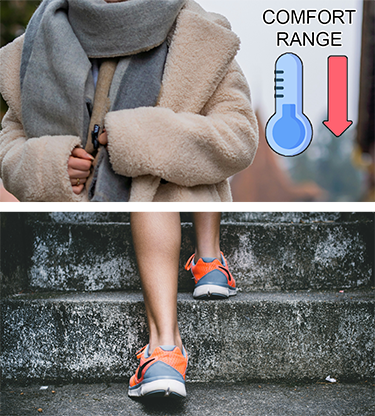
Think of a place where you walk in and almost never notice the temperature. You just… get on with your life. That space is within your personal comfort range.
For many people, that indoor range is somewhere in the low 20s °C ( high 60’s to low 70s °F), but it’s not a fixed point. Put on a thick sweater, and your comfort range shifts down. Start running up and down stairs and it shifts again. Your body is constantly producing heat and trying to get rid of just enough of it to keep your core temperature stable. When that heat balance feels right, you feel neutral. When it doesn’t, you start noticing.
Next time you feel perfectly comfortable, check the thermostat if you can. Is the actual number higher or lower than you expected?
Activity 2 – Air temperature
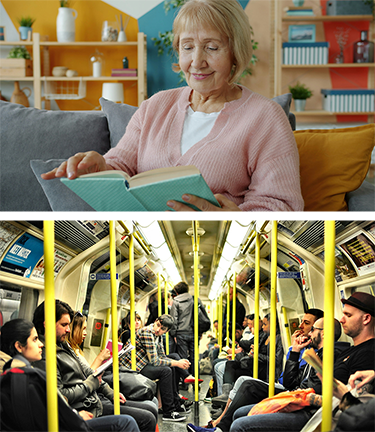
Most people blame the thermostat first: “It’s too hot in here” or “someone turned it down too much.” Air temperature does matter. As it climbs, your body sends more blood to the skin and starts sweating to lose heat. As it drops, your body pulls blood inward, and may trigger shivering to create extra heat. But two spaces at the same air temperature can feel different. A quiet reading room at 22°C might feel fine, while a crowded studio at 22°C feels warm and stuffy. That’s because temperature is only part of the story. Occupancy, activity, and ventilation all affect how your body sheds heat.
Have you ever walked from one classroom to another with the same thermostat setting but completely different comfort? What made the second room feel different?
Activity 3 – Radiant Temperature
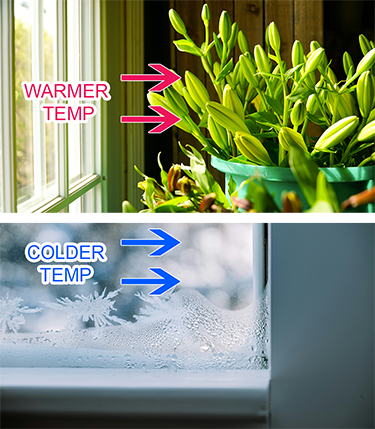
Sit next to a cold window in winter, and you’ll feel chilled, even if the air is warm. Sit beside a sun-baked wall in summer, and you’ll feel hot, even when the thermostat seems reasonable. In both cases, it’s not really the air that’s the problem. It’s the surfaces around you. Your body constantly exchanges heat with walls, glass, floors, and ceilings through radiation. If most of what you “see” is cold, you lose heat and feel cool. If what you see is warm, you gain heat and feel hot. Designers talk about mean radiant temperature to capture this effect, but you don’t need the formula to understand the feeling. Just pay attention to how different corners of a room feel, especially near big windows or exterior walls.
Think of a spot on campus where you always choose the seat away from the window or away from a particular wall. Is it because the surface feels too cold or too hot?
Activity 4 – Humidity
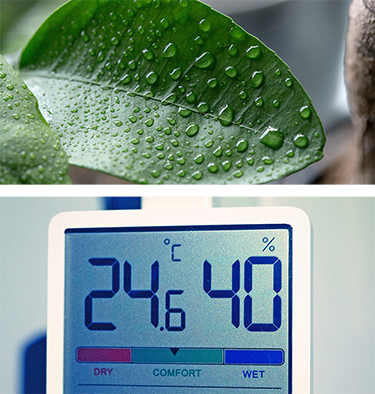
Now imagine two days at 28°C. On one day, the air is dry; on another day, it’s humid and heavy. Same temperature, completely different experience. Your main cooling trick is sweat evaporating from your skin. When the air is very humid, there’s already a lot of water vapor floating around, so sweat can’t evaporate easily. Heat leaves your body more slowly, and you feel hot, sticky, and tired. In dry air, sweat evaporates quickly, and you feel cooler at the same temperature. At the other extreme, very dry indoor air can irritate your throat and eyes even when the temperature looks perfect. So comfort is not only “how warm,” but also “how wet or dry” the air is. In your personal experience, which drains you more: a hot humid day, or a hot dry day?
Activity 5 – Wind and Air Movement
Picture yourself in two places: • standing in still air at 30°C • standing in a steady breeze at 30°C The number is the same, but they do not feel the same at all. Air movement increases heat loss from your skin and speeds up the evaporation of sweat. You haven’t changed the air temperature; you’ve changed how fast heat leaves your body. Outdoors, this can be life-saving in hot conditions and dangerous in cold ones. That’s why wind chill values are used in weather reports for winter. Indoors, even a gentle fan can stretch the upper comfort limit. People might feel fine at 26°C with a light breeze, where they’d complain at 24°C with totally still air. On a warm day, if you had to pick just one, would you choose a shady spot with no breeze, or a breezy spot in the sun?
Activity 6 – Temperature and Feels Like

Weather apps often show two numbers: the actual temperature and a “feels like” value. That second number is trying to pack multiple factors into one: air temperature plus humidity (heat index) or air temperature plus wind (wind chill). Indoor comfort tools do something similar, but with more ingredients. They consider air temperature, radiant temperature, humidity, air speed, clothing, and activity. The details can get technical, but the principle is simple: comfort is a combination, not a single setting. Tuning several factors a little bit is often more effective – and more energy efficient – than forcing one factor to do all the work. When you decide what to wear for the day, do you pay more attention to the actual temperature or the “feels like” number?
Activity 7 – Clothing, Activity How People Adapt

Two people, same room, same conditions: one says “I’m freezing,” the other says “I’m fine.” That’s normal. Humans have different body types and respond to temperature differently. Clothing and activity can help keep people more comfortable, based on their body type, and what they are wearing and doing. A thick hoodie traps heat that a T-shirt would let escape. Sitting still at a desk produces much less heat than rushing around campus or working in a shop. There’s also the question of how much people are used to variation. In buildings where windows open, fans are common, and seasons are allowed to “show” a little indoors, people often accept a wider comfort band. In buildings that are locked at a single temperature year-round, small changes feel like a big deal. As designers, giving users some control – opening a window, drawing a shade, turning on a fan, choosing a different spot – can be as important as picking the “perfect” number on the thermostat.
When you start to feel uncomfortable somewhere, what’s the very first thing you usually do: adjust your clothes, move to a different spot, or go looking for the thermostat?
Activity 8 – Why People Feel Temperature Differently

Have you ever noticed that one person reaches for a jacket while another is perfectly comfortable in the same room? Even before clothing or activity comes into play, people do not all experience temperature the same way. Our bodies are built differently, and those differences affect how we gain, hold, and lose heat. Body size, body composition, circulation, age, and natural metabolism all play a role. Some people naturally produce more body heat, while others lose heat faster. Some feel warm quickly, while others stay cold even when the room seems fine. You could think of it as each person having their own internal baseline for comfort. Part of that difference comes from biology, including the traits we inherit, but the important point is simple: human comfort is personal. There is no single temperature that feels perfect for everyone. That is why comfort in shared spaces cannot be defined by a single fixed number. A well-designed space makes room for difference, offering people simple ways to adjust their surroundings and find what feels right for their own bodies. When you are in a shared room, and your comfort feels different from everyone else’s, do you usually think the room is wrong, or do you recognize that your body may simply experience it differently?
Review
- For many people, indoor comfort is often somewhere in the low 20s °C, but it can shift depending on clothing and activity.
- Two rooms at the same air temperature will always feel exactly the same.
- Sitting next to a cold window in winter can make you feel chilled even if the air temperature is warm
- High humidity makes it harder for sweat to evaporate, which can make you feel hotter.
- A steady breeze at 30°C can make you feel cooler than standing in still air at the same temperature.
- The “feels like” temperature only considers the air temperature and nothing else
- Sitting still produces more body heat than running up stairs
- There is one single temperature that feels perfect for everyone in a shared space.
- Different people feel temperature differently.
Explore
- Academic study on students’ thermal comfort preferences.
- Basic References on comfort and temperature range
- Definition of thermal comfort in buildings
- Health effects of heat and comfort tips
- How air movement and natural ventilation affect comfort
- How heat transfer and comfort relate to building design.
- How humidity affects evaporation and comfort.
- NIST technical report on thermal comfort measurement.
- NOAA explanation of “feels like” and heat index.
- NOAA wind chill and how wind changes comfort
- Radiant Thermal Comfort in Building Design
- Research on thermal comfort in educational buildings
- Setting thermal comfort criteria
- Thermal comfort principles
Relate









































All contents copyright © NEXT.cc. All rights reserved. Terms of Use